
Guide
A Study of Surfaces
Every surface has its own character. Compare appearance, routine care and practical considerations before deciding what belongs in your kitchen.
Quartz
Engineered quartz combines quartz minerals with resins and pigments to create dense, consistent slabs. It is non-porous, normally needs no routine sealing and is available in solid colours, stone effects and dramatic marble-inspired patterns.
- Best for: busy kitchens that benefit from predictable colour and straightforward care.
- Consider: use trivets for hot cookware and follow the chosen manufacturer’s care instructions.
Granite
Granite is a natural stone, so every slab has individual mineral movement, colour and pattern. It is hard-wearing and well suited to kitchen worktops when correctly fabricated, installed and maintained.
- Best for: customers who value natural variation and one-of-a-kind character.
- Consider: sealing requirements vary; spills should be wiped promptly.
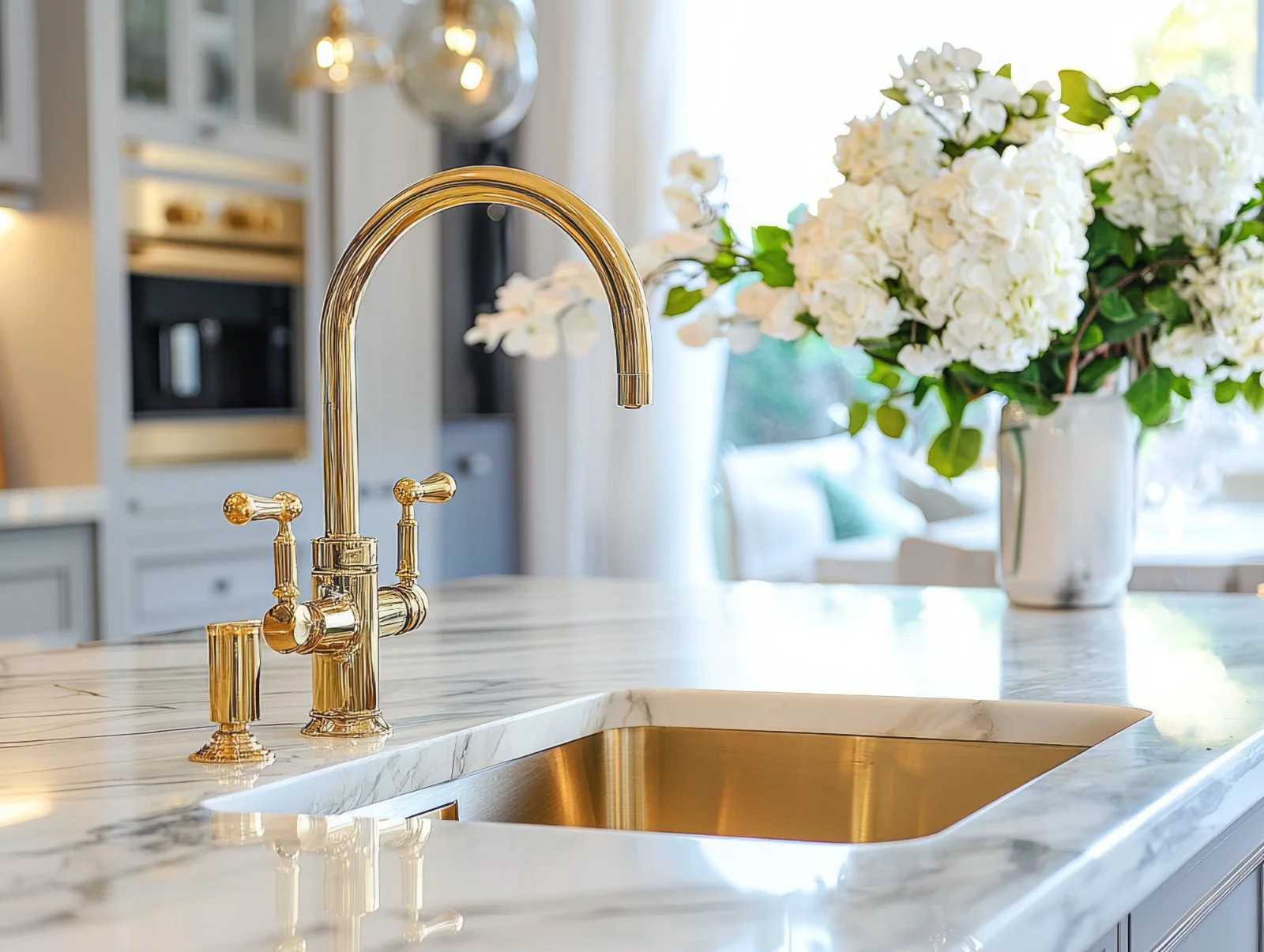
Marble
Marble is prized for expressive natural veining and a timeless appearance. It develops a patina with use and requires more considered care than many engineered surfaces.
- Best for: statement islands, vanities, fireplaces and kitchens where natural character is part of the design.
- Consider: acidic liquids can etch the surface and porous varieties may require sealing.
Porcelain and sintered stone
Porcelain and sintered surfaces offer a refined contemporary finish with strong resistance to heat, UV exposure and everyday staining. Large-format slabs can also create coordinated worktops and splashbacks.
- Best for: contemporary kitchens, slim profiles and indoor/outdoor design continuity.
- Consider: edge detailing and handling require specialist fabrication.
How to choose
Start with how the room will be used, the amount of routine care you are comfortable with and the look you want to achieve. Samples help with colour, but natural and heavily veined slabs should also be viewed and planned carefully because pattern and tone can vary.